| |||

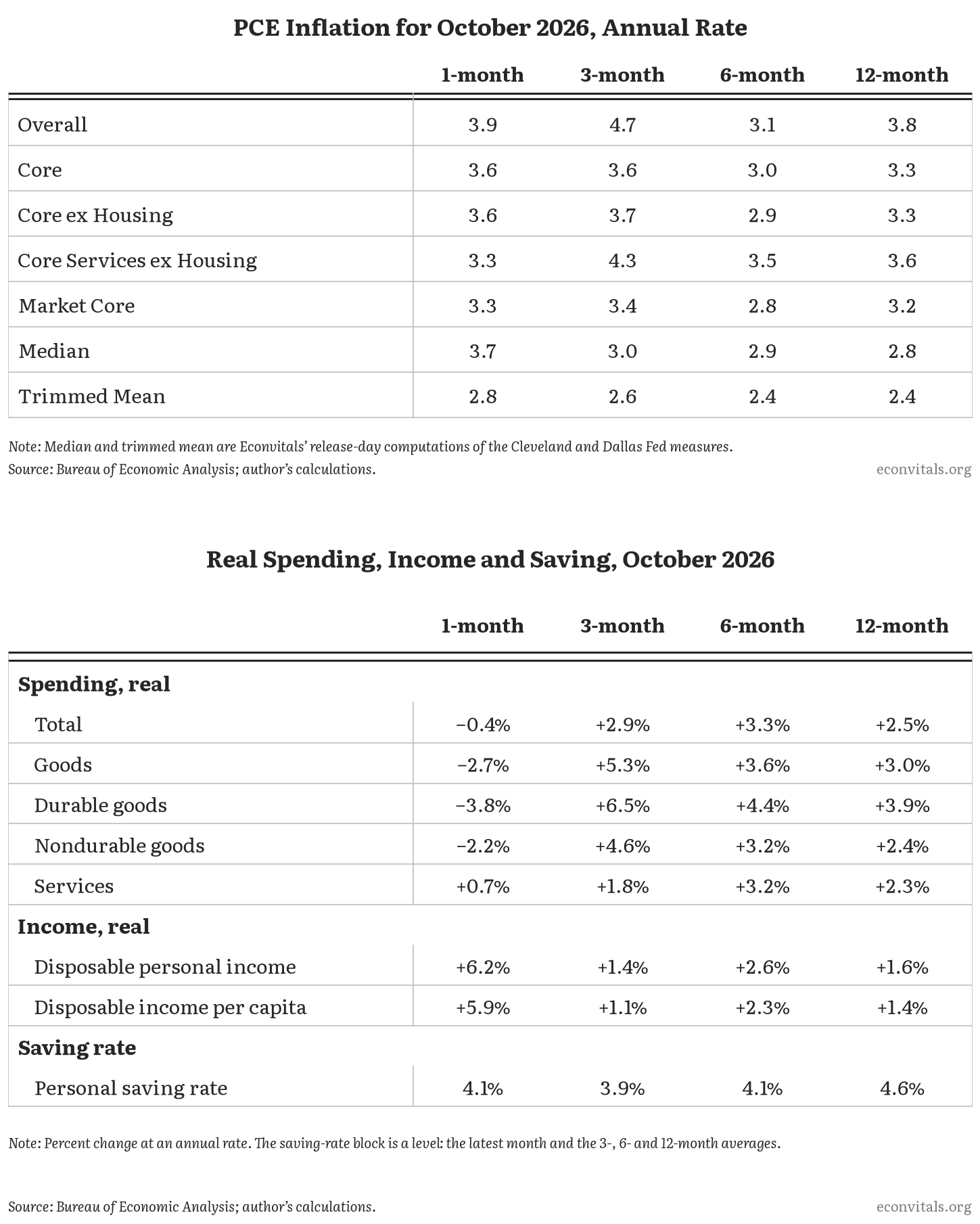
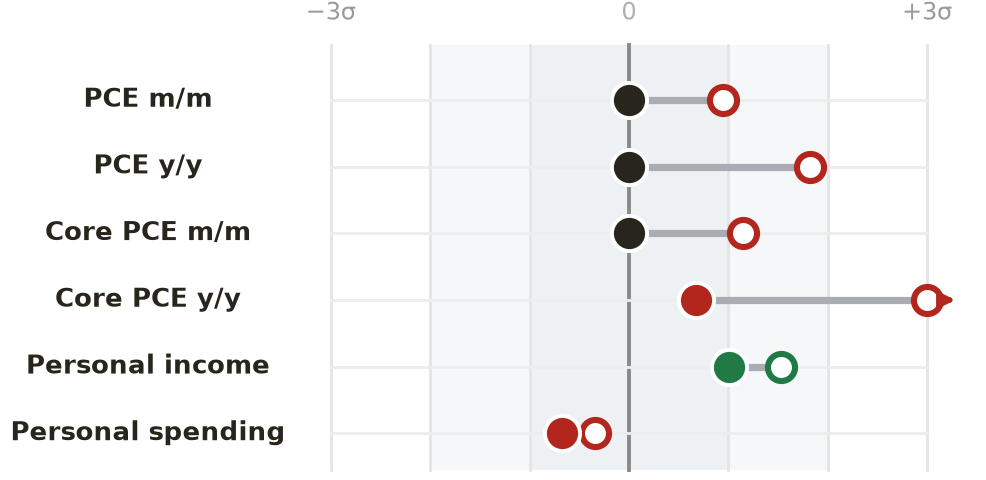
Core PCE prices rose +0.29%, as forecast — but the 3.3% yearly rate was a tenth above consensus and the highest in a year.
| October 2026 | ||||
| MEASURE | ACTUAL | CONSENSUS | PRIOR | VS. CONSENSUS |
|---|---|---|---|---|
| PCE m/m | +0.32% | +0.32% | +0.50% | in line |
| PCE y/y | +3.8% | +3.8% | +3.7% | in line |
| Core PCE m/m | +0.29% | +0.29% | +0.32% | in line |
| Core PCE y/y | +3.3% | +3.2% | +3.1% | ▲ +0.1pp |
| Personal income | +0.7% | +0.4% | +0.3% | ▲ +0.3pp |
| Personal spending | +0.3% | +0.4% | +0.6% | ▼ −0.1pp |
| Consensus for PCE m/m and Core PCE m/m: the median forecast compiled by Nick Timiraos (WSJ). | ||||
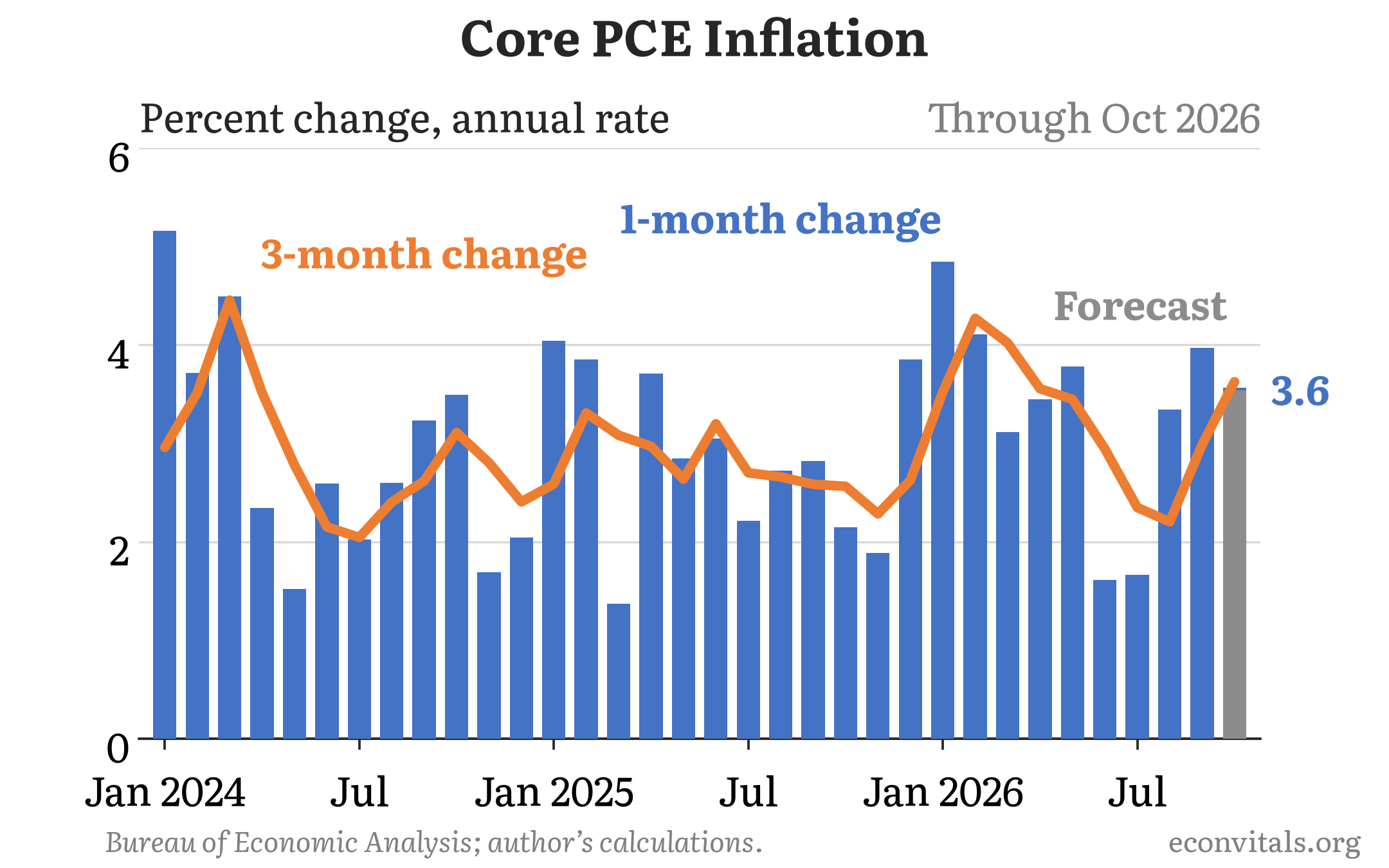
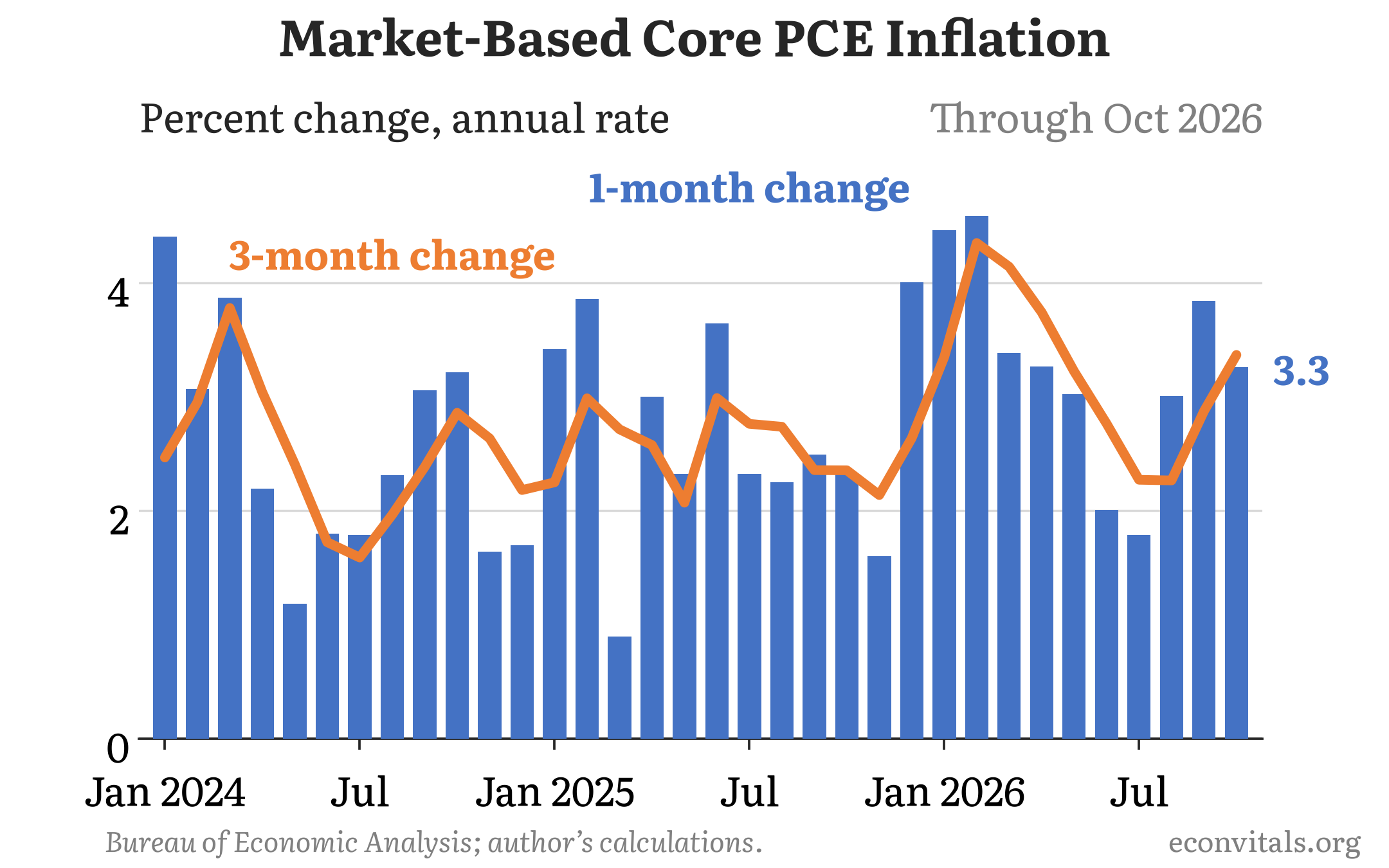
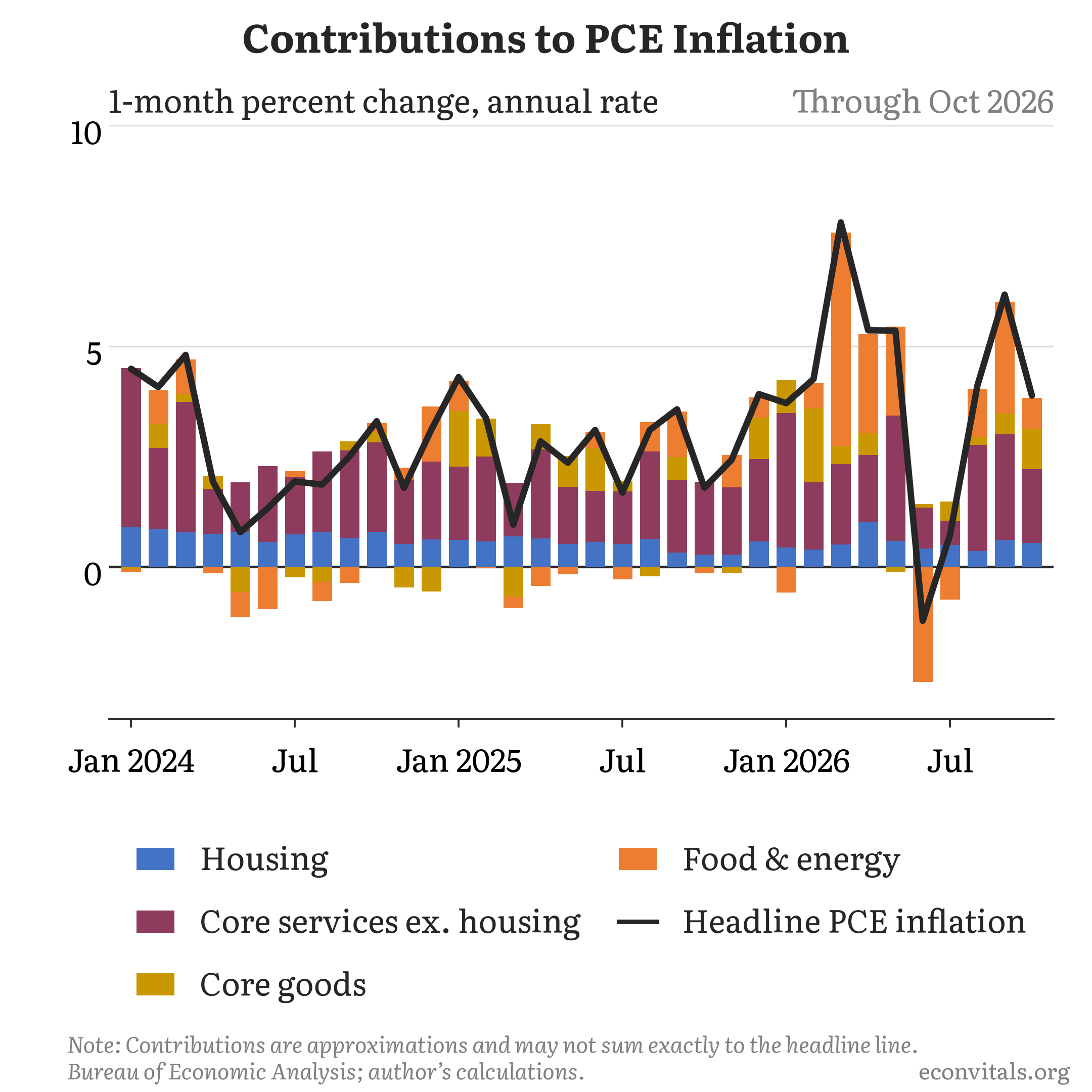
Core inflation had been picking back up after a soft early summer, and October confirms that rather than breaking it. The monthly gain matched forecasts, but it was the third firm month in a row. That lifted the three-month annualized pace to 3.6%, up from 2.2% in August and the fastest since March. A version limited to market prices, which strips out imputed items, shows the same climb.
The mix shifted toward goods. Core goods added 0.9 percentage point to the annualized monthly rate, their largest contribution since February. Core services excluding housing, the so-called supercore, added 1.7 points, less than in September. Food and energy, which had pushed headline inflation up in September, contributed far less, and housing held steady. Underlying pressure moved between categories rather than fading.
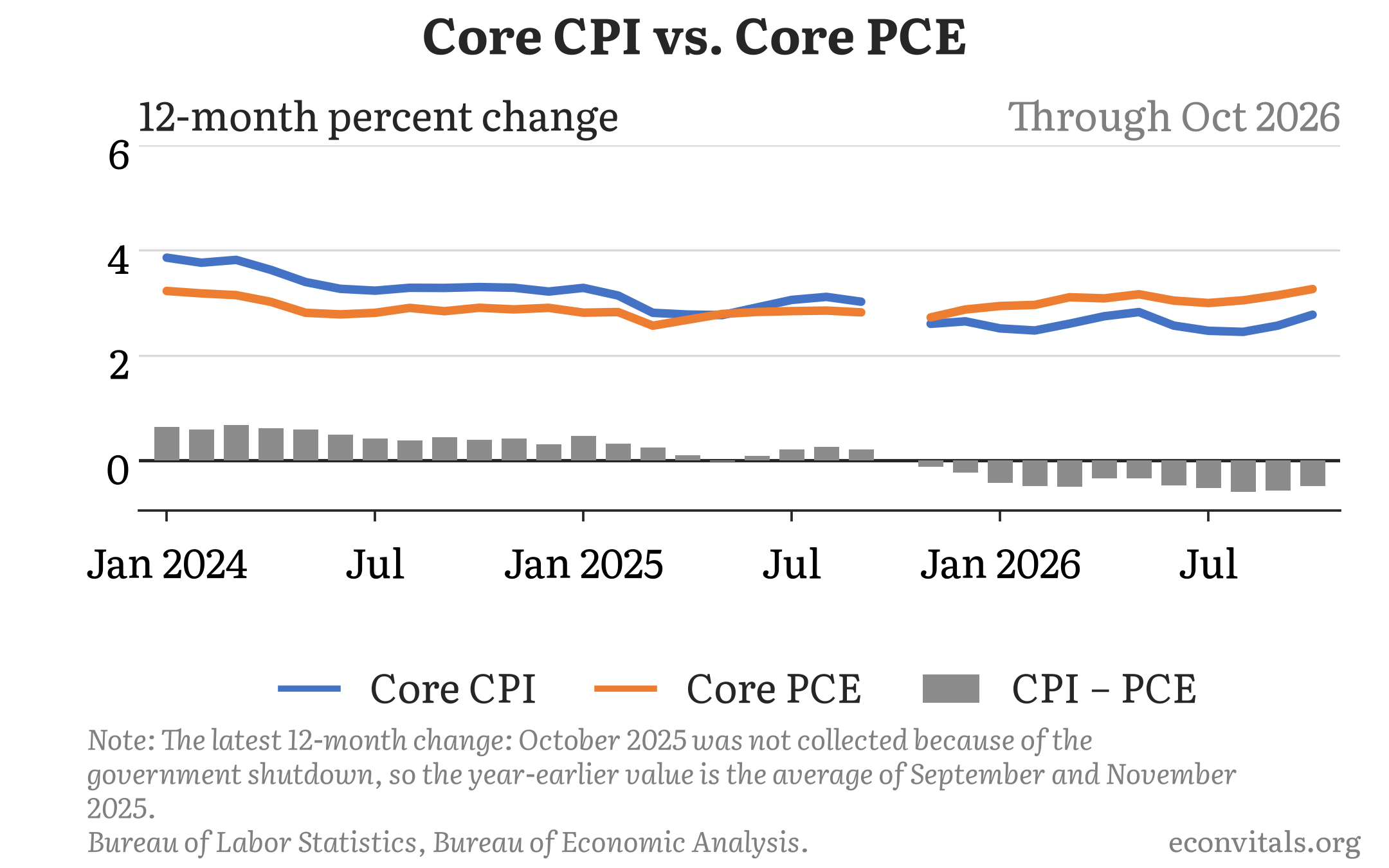
Core PCE inflation over the past year has run about half a point above core CPI, and it has stayed above CPI for most of the past year. The gap narrowed slightly from its widest point in August as core CPI firmed. The two measures now differ more in level than in direction, because both are rising.
Income beat expectations, but part of the gain will not recur. Private wages and salaries led the rise in compensation, and dividends lifted asset income. Government benefits jumped because of one-time Medicare Improvement Fund premium rebates. Real disposable income per person rebounded sharply after September’s drop. The saving rate climbed from its lowest level of the past year. Income for April through September was revised with new wage data.
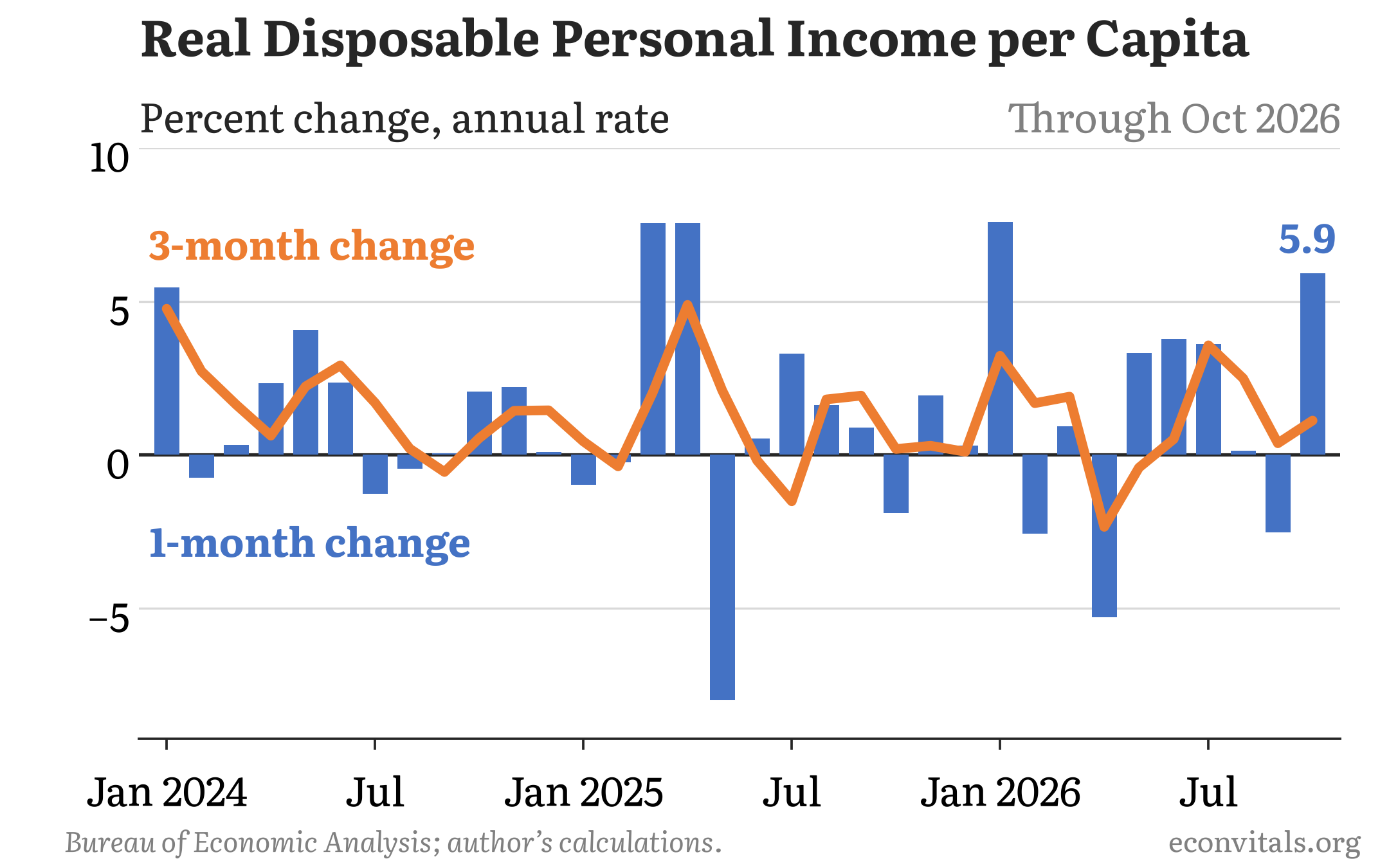
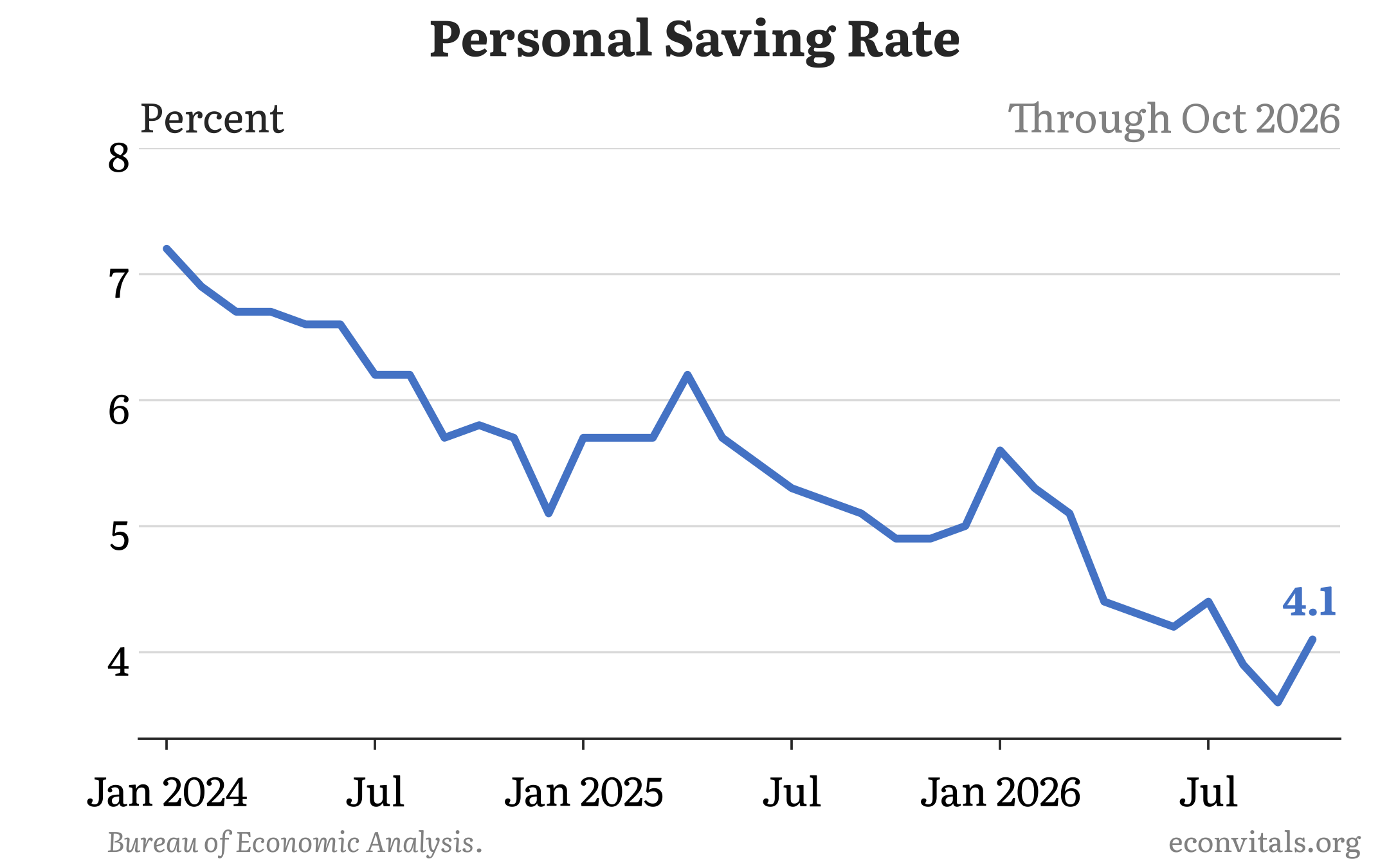
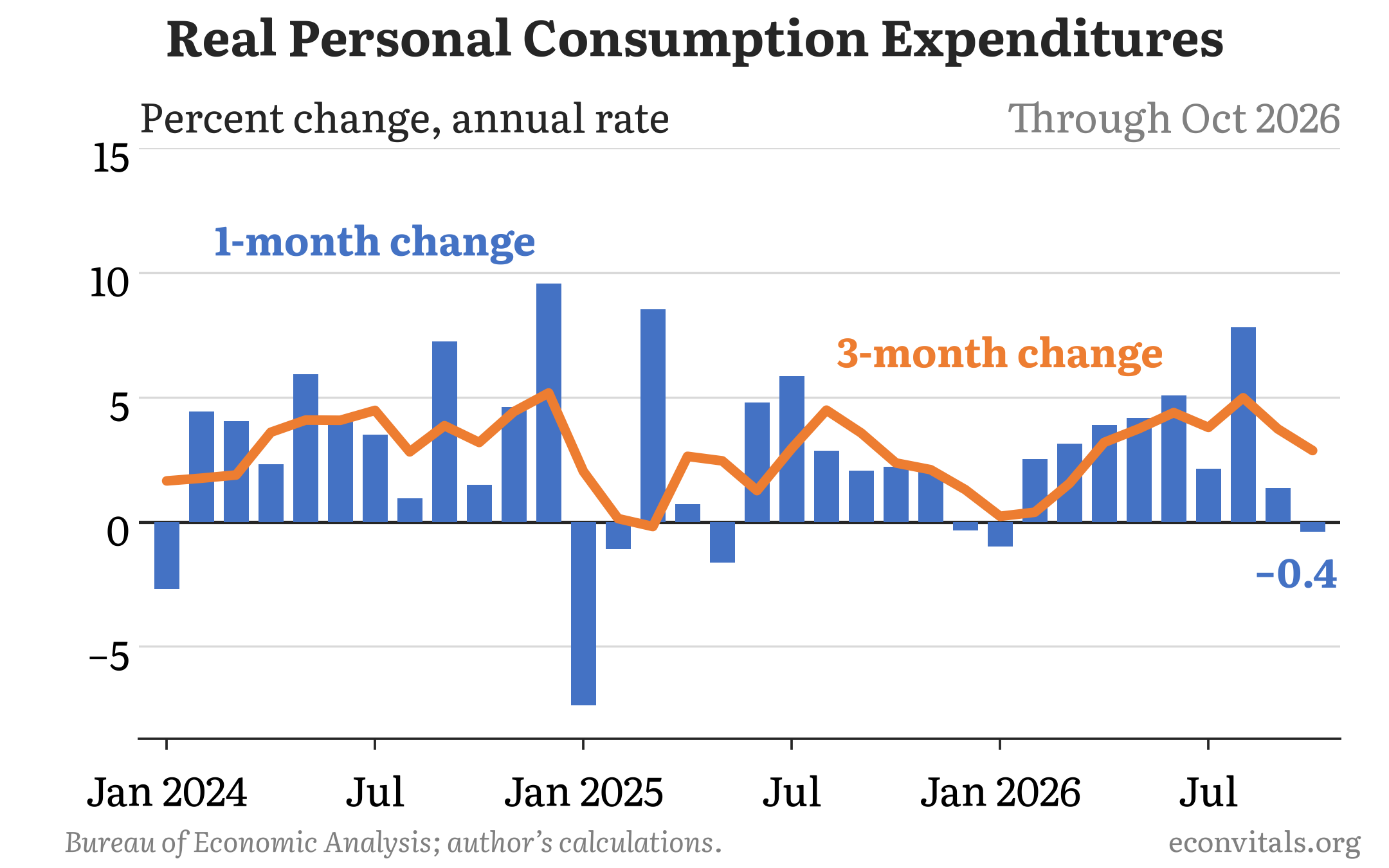
October brought inflation in line with forecasts for the month but firmer than the summer trend. Spending, meanwhile, has stalled in volume. Dollar outlays rose, but inflation-adjusted consumption slipped slightly after a soft September. That pulled the three-month pace down to 2.9% from August’s surge. Households took in more income, spent about the same in real terms and saved the difference.
Last, the headline and underlying numbers from the release, together.